Most people shopping for a jet ski ask about the price tag first. Then they ask about horsepower.
Fuel costs?
That usually comes up third or fourth, sometimes not until after they’ve already bought the thing. That’s backwards.
Gas is the expense that shows up every single time you ride, and depending on what you buy and how you ride it, it can range from genuinely cheap to quietly expensive. Before you commit to a machine, it’s worth running the actual numbers.
What Controls How Much Fuel You Burn
The two biggest factors are engine size and throttle position. That sounds obvious, but what surprises most buyers is how dramatic the difference is between the two.
A jet ski at full throttle burns two to four times more fuel than the same machine at a comfortable cruise speed.
Throttle position is far more important than engine displacement in terms of real-world consumption. You can own a 300-horsepower machine and keep your fuel costs reasonable if you’re not pinning it. You can also own a mid-range ski and burn through a tank faster than you expected if you’re riding hard the whole time.
Weight matters too. Load a 3-up PWC with two adults and a kid in full gear, and you’re asking the engine to work harder to maintain speed. Same with wind and chop. Open water on a calm day is always cheaper to ride than getting bucked around in wake traffic.
The Numbers by Engine Category
Scale: 0–24 GPH. Bar widths proportional to fuel consumption at stated conditions.
real-world average
real-world average
wide-open throttle
Here's where it gets interesting, and where most people underestimate the spread.
Entry-level engines like the Sea-Doo Spark's 900cc ACE motor (available in 60 HP and 90 HP) are genuinely efficient. The Spark 60HP burns around 2 to 2.4 gallons per hour. The tank holds 7.9 gallons. Do the math: you're getting a few hours of ride time before you run dry.
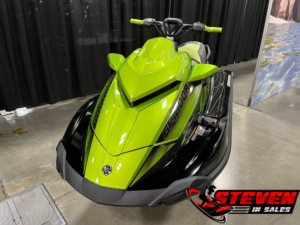
Mid-range recreation models are where most buyers land, and where the consumption picture changes. Something like the Yamaha VX Cruiser HO (180 HP) burns around 3.3 to 3.5 gallons per hour when cruising at a relaxed 25 mph. Push it to wide-open throttle and that climbs to roughly 12.8 GPH. If you spend your rides anywhere in between, which most people do, call it 6 to 8 GPH as a real-world average.
Performance machines don't play by the same rules. The Kawasaki Ultra 250X burns 24 gallons per hour at full throttle. The Sea-Doo RXT-X 255 was measured at 20.6 GPH, and Yamaha's FX SHO came in at 21.7 GPH. With tank sizes typically in the 18 to 20-gallon range, an all-out run at WOT depletes your tank in under an hour. Nobody rides like that every session, but it should change how you think about owning one of these machines.
What a Typical Ride Actually Costs You
Let me put some real dollar amounts to this because that's what actually matters when you're budgeting.
As of late March 2026, the national average for regular unleaded is hovering around $3.99 per gallon. Some states are well over $5. Use $4 as a clean working number.
A two-hour ride on a Sea-Doo Spark at mixed throttle (not pegged the whole time, but not crawling either) burns roughly 4 to 5 gallons. That's $16 to $20 per ride.
A two-hour ride on a mid-range ski averaging 6 to 8 GPH burns 12 to 16 gallons. At $4 per gallon, you're looking at $48 to $64 for the afternoon. Still manageable, but it adds up.
A two-hour session on a performance jet ski ridden hard averages 10 to 15 GPH in the real world. You might stop once to refuel mid-ride. Budget $60 to $100 per session, sometimes more.
Industry estimates put the average owner at about 30 hours per year on the water. Multiply those per-ride costs out across a season, and you're looking at somewhere between $300 and $1,500-plus annually just in fuel, depending on the machine and how hard you're riding it. That's a number worth knowing before you sign the paperwork.
finance.yahoo.com — Average gas prices by state, March 30, 2026
The Marina Tax Nobody Talks About
Here's something that doesn't show up in any manufacturer's promotional material: marina fuel costs more. Sometimes a lot more.
Gas at a marina dock typically runs $1 to $2 per gallon above what you'd pay at a road gas station. In high-demand summer destinations, the premium is even higher. That same $4 gallon becomes $5 or $6 at the dock, and you might not realize it until you're already in the water with no other option.
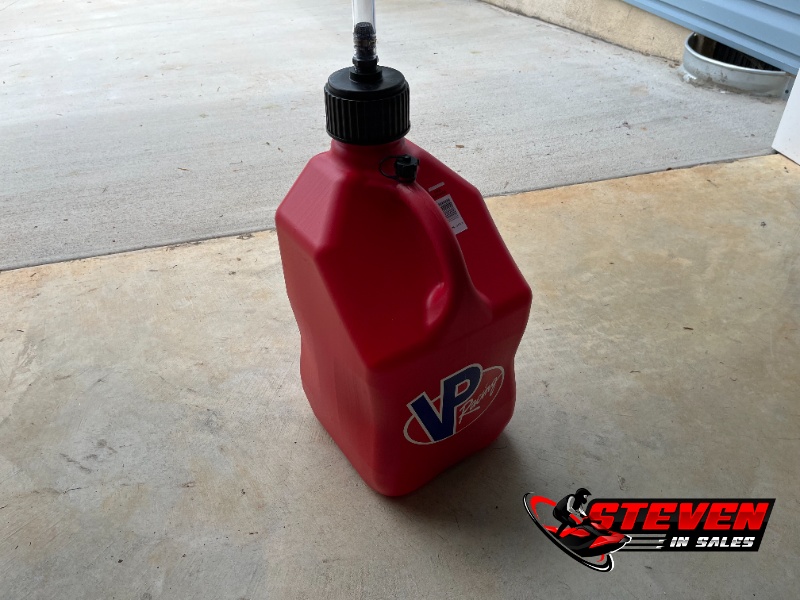
The simple fix is to fill up at a road station before launching if you can. Keep a clean, portable gas container in your truck for topping off at the ramp. It takes five minutes and saves real money over the course of a season. On a full 18-gallon fill at the marina versus a gas station, the difference at $1.50 per gallon premium is $27 per fill. Over a summer with 10 fill-ups, that's $270 you didn't have to spend.
What Fuel You Put In Matters
One thing that genuinely affects both efficiency and engine health is whether your gas contains ethanol. Most pump gas in the U.S. is E10, meaning 10% ethanol content. Most jet ski manufacturers allow it, but ethanol is harder on rubber fuel system components and produces slightly less energy per gallon than pure gasoline.
If you can find ethanol-free premium at a marina, it costs more upfront but burns better and is better for your engine long-term. Some riders notice a small but measurable improvement in range.
If you want to go deeper on the fuel debate, there's a full breakdown on running ethanol gas in your jet ski that covers what the manufacturers actually say.
How Riding Style Moves the Needle More Than You Think
I've seen customers buy the same model ski and report wildly different fuel costs. One guy fills up twice every weekend. Another guy riding the same exact ski fills up once and has gas to spare. The machine is identical. The riding style is not.
Constant throttle blips, aggressive acceleration from a dead stop, and chasing down every boat wake takes a surprisingly heavy toll on consumption. Modern jet skis have ECO modes for a reason. The Yamaha VX line and several Sea-Doo models offer intelligent throttle modes that smooth out fuel delivery at lower speeds. If you're not racing and you're with family, those modes genuinely reduce how much you burn.
One counterintuitive thing worth knowing, cruising at 25 to 30 mph is often the most efficient speed range for most mid-range machines. Going faster doesn't just burn more fuel per hour, it also dramatically increases aerodynamic drag and hull resistance. You're spending significantly more per mile traveled. If cost per ride matters to you, resist the urge to ride at 45 mph when 30 mph gets you around the lake just fine.
The Real Ownership Cost Picture
Fuel is just one piece of what a jet ski actually costs per year. If you want to see how gas fits into the full ownership picture alongside insurance, maintenance, storage, and launch fees, the breakdown in what it costs to own a jet ski puts it all in one place.
The short version is this... gas is the most predictable ongoing cost, and it's the one you have the most control over. Buy a PWC that fits how you actually ride. If you're cruising a lake with the kids on weekends, you don't need 300 horsepower, and you don't need to budget for it. If you're running performance demos or riding hard every session, your fuel spend is going to reflect that, and you should factor it in from day one.